Buy It Once, Buy It Right
There’s a cobbler I used to visit more than I’d like to admit. That cobbler was the first person to teach me what ‘buy it once, buy it right’ actually means in practice.
Every six months or so I’d walk in with another pair of leather work shoes that had given up the ghost. Cracked leather, worn-through soles, an uneven heel, the whole story. He’d look them over, shake his head slightly, and get to work. Fifty dollars later I’d walk out with the same cheap shoes, patched up for another go.
One day he stopped me. “You know,” he said, “you’re wasting your money. You should save up and buy a proper pair.”
So, I asked how much a proper pair would cost. He replied with three hundred dollars.
I nearly fell over.
At the time I didn’t have three hundred dollars spare for shoes. Honestly at this point, I didn’t even realise there were shoes that sold for three hundred dollars. But the comment stuck with me. Because the maths, even then, was pretty obvious. One to two pairs a year at whatever the cheap ones cost, plus fifty dollars in repairs every six months — I was getting close to it. I just couldn’t see it because the spending was spread out and easy to ignore.
That cobbler planted a seed that took years to grow. Eventually it did.
The way most of us are taught to shop
Most of us learn to shop by price. Find the cheapest version of the thing you need, buy it, repeat. It feels responsible. It feels like you’re being careful with money.
The problem is it often isn’t careful at all.
And honestly, it’s not entirely our fault. We’re swimming against a current that’s been deliberately engineered. Every advertisement, every sale, every “limited time offer” is designed to encourage consumption and accumulation. Society tends to measure success by what you have and how new it is. Businesses are built on repeat purchases. Nobody profits when you buy something once and keep it for twenty years.
So the default setting — buy cheap, buy often, buy more — isn’t just habit. It’s the water we swim in.
Cheap things tend to break faster. They wear out, fall apart, go out of shape, stop working. So you buy them again. And again. The per-unit cost looks low but the lifetime cost is quietly enormous — and that’s before you factor in the time spent replacing things, the frustration of stuff that doesn’t work properly, and the slow accumulation of things that fill your home without actually serving you.
I grew up in a household where money was tight. Three kids, one income for a fair portion, careful spending out of necessity. My parents didn’t buy a lot. But when they did buy something, they tried to buy well. Some knives given to them as a wedding gift, used so heavily the blades have shaped themselves around where most of the cutting happens. Kitchen pots that are now more than three decades old and still going strong. A Bose speaker that filled the lounge room with music from when we were toddlers right through to when we left home.
They weren’t buying luxury. They were buying things that lasted.
That distinction took me an embarrassingly long time to understand.
The lifestyle creep years
In my twenties, once I started earning reasonable money after a few lean years living out of share houses and eating basic, I fell headfirst into what I now recognise as lifestyle creep.
Here’s the thing about how it actually played out for me. I’d walk past a shop window, see a shirt I liked the look of, and buy it. Did I stop to think about whether it was actually the kind of thing I’d wear? Rarely. Sometimes I got lucky and it became a favourite. Other times — and I think you might relate to this — it sat in the wardrobe, unused judging me silently for months before quietly disappearing in a clear-out.
Fast fashion because it was so cheap — until it twisted after two washes and went in the bin. Leather shoes every six months. Eating out multiple times a week. Coffee every day, multiple times a day, to survive twelve-hour days, without ever stopping to do the math.
When I eventually did the math on the coffee alone, it came to thousands of dollars a year. A shocking, and genuinely uncomfortable percentage of my salary at the time. Coffee for some would be totally worth it. For me, right then, it wasn’t.
Here’s the part I’m not proud of: I told myself I was fine because I never went into debt. And technically that was true. But I didn’t have much to my name either when I should have. “Not in debt” felt responsible. Looking back, it just meant I was spending everything I earned rather than borrowing extra to do it. Not quite the achievement I’d convinced myself it was.
That’s the thing about lifestyle creep. It doesn’t feel like a decision. It just feels like life. It feels earned. It feels like reward.
What actually changed
A few things shifted my thinking, not all at once.
Reading helped. Getting into personal finance — the kind that talks about the real cost of things over time, the power of compounding, the relationship between spending and freedom — reframed how I saw every purchase. Not as a one-time transaction but as a recurring commitment. The ability to pursue a life you truly want and thinking more deeply about what that looks like for you.
My parents’ example finally sank in. They had been trying to buy it once, buy it right all along. Watching things they’d owned for decades still going strong while I was replacing cheap versions of the same things every year started to feel less like frugality and more like intelligence.
And the environmental lens clicked into place. My dad ran bush care groups my entire childhood. The idea that buying less but buying better means less going into landfill — that buying a quality item once is genuinely more sustainable than buying a cheap version four times — made the whole thing feel like the obvious right answer.
Slowly, I started to change how I bought things.
Buy it once, buy it right — what it looks like in practice
It’s not about buying expensive things. It’s about buying the right things.
The question I ask now before any significant purchase isn’t “what’s the cheapest option?” It’s “what’s the one I’ll still be happy with in ten years?”
Sometimes those are the same answer. Sometimes they’re not even close. Here are a few areas I practice this in.
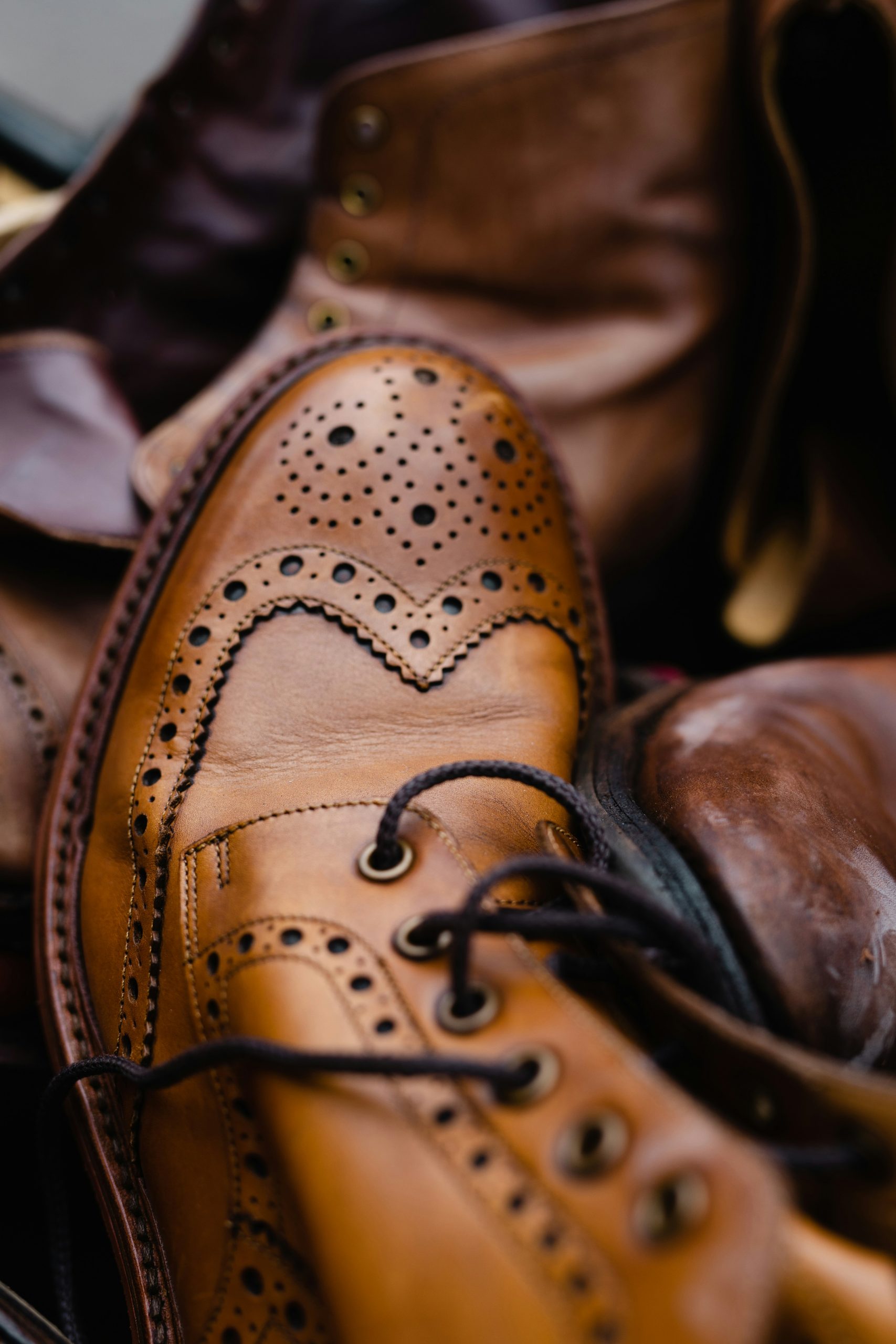
Clothes. I buy far less than I used to, and I try to buy better, more classic items. A well-made piece from a brand that pays its workers properly will outlast four fast fashion versions and look better doing it. I’ve also become a convert to the circular economy — eBay, Depop, Facebook Marketplace. High quality pieces in great condition for a fraction of the original price. And leather shoes with Goodyear welt construction, where the soles can be replaced rather than the whole shoe discarded. The cobbler would be proud.
Kitchen. A good knife, properly cared for, is a completely different object from a cheap one. Same with pots and pans. You notice the difference every single time you cook and you enjoy it more. My parents figured this out thirty years ago. I’m just catching up. Spend once on things you use daily — they repay you with interest.
Electronics. I once bought knock-off earbuds that broke the first time I dropped them. A proper pair of Apple Airpods has survived years of daily use. My television is ten years old and still going. The one before it, a cheap buy, stopped turning on after three years for no apparent reason. The maths wasn’t complicated.
Furniture. A chair made from real timber, built properly, will outlast flat-pack versions many times over. It’ll also look better as it ages rather than worse. There’s a second-hand Persian rug in our living room that I found on Etsy for not very much money. It’s one of my favourite things in the house. Nobody needs to know what I paid for it.
Buying better doesn’t always mean spending more, by the way. Sometimes it simply means being more deliberate. Taking twenty minutes to read reviews before buying something you’ll use every day, that’s twenty minutes well spent. Waiting a week before pulling the trigger on an impulse purchase to see if you still want it tends to be great advice. Heck, even a day is good. All of this helps increase the chances of avoiding buyers remorse, which we can all relate to.
The thing nobody tells you
Buying better requires something uncomfortable upfront: spending more now to spend less later.
That’s a hard sell when money is tight. I know — I’ve been there. There’s no point telling someone who genuinely can’t afford the better option to just buy the better option. Sometimes the cheap thing is the right call because it’s the only call.
But for a lot of purchases, the barrier is less about affordability and more about habit and visibility. We’ve been trained to see the sticker price and stop there. The lifetime cost — the real cost — stays invisible because it’s spread across months and years and we never stop to add it up.
Start adding it up.
Start small if you need to. Kitchen knives are a good place — you use them every day, quality is immediately noticeable, and a decent set isn’t a huge outlay. You only need a couple. Start with one. Or shoes. Or whatever you find yourself replacing most often.
The circular economy is your friend here. Buying secondhand quality beats buying new cheap almost every time. You get the longevity without the full original price, and something that might otherwise end up in landfill gets another chapter.
An unexpected side effect
Something I didn’t anticipate when I started buying less and better: owning less stuff is genuinely freeing.
There’s a psychological weight to clutter that’s easy to underestimate until it’s gone. Clearing out the kitchen drawer full of things you never use, the wardrobe half-full of clothes you never actually wear — the lightness afterwards isn’t just physical. A home with fewer, better things in it is easier to live in, easier to clean, easier to think in.
You can live well in a smaller space if what’s in it is actually worth having. That has real financial implications too — less space needed means less spent on housing. It compounds in directions you don’t expect.
Back to the cobbler
I eventually bought those shoes. Not right away — it took a few more years and a better salary before three hundred dollars felt manageable for footwear. But I bought them. Took them back to the same cobbler when the soles eventually wore down. He resoled them for sixty dollars.
That was years ago. I’m still wearing them.
Buy it once. Buy it right.
— Dave
Want to follow along?
One email every week or two on living better. No noise, no fluff.