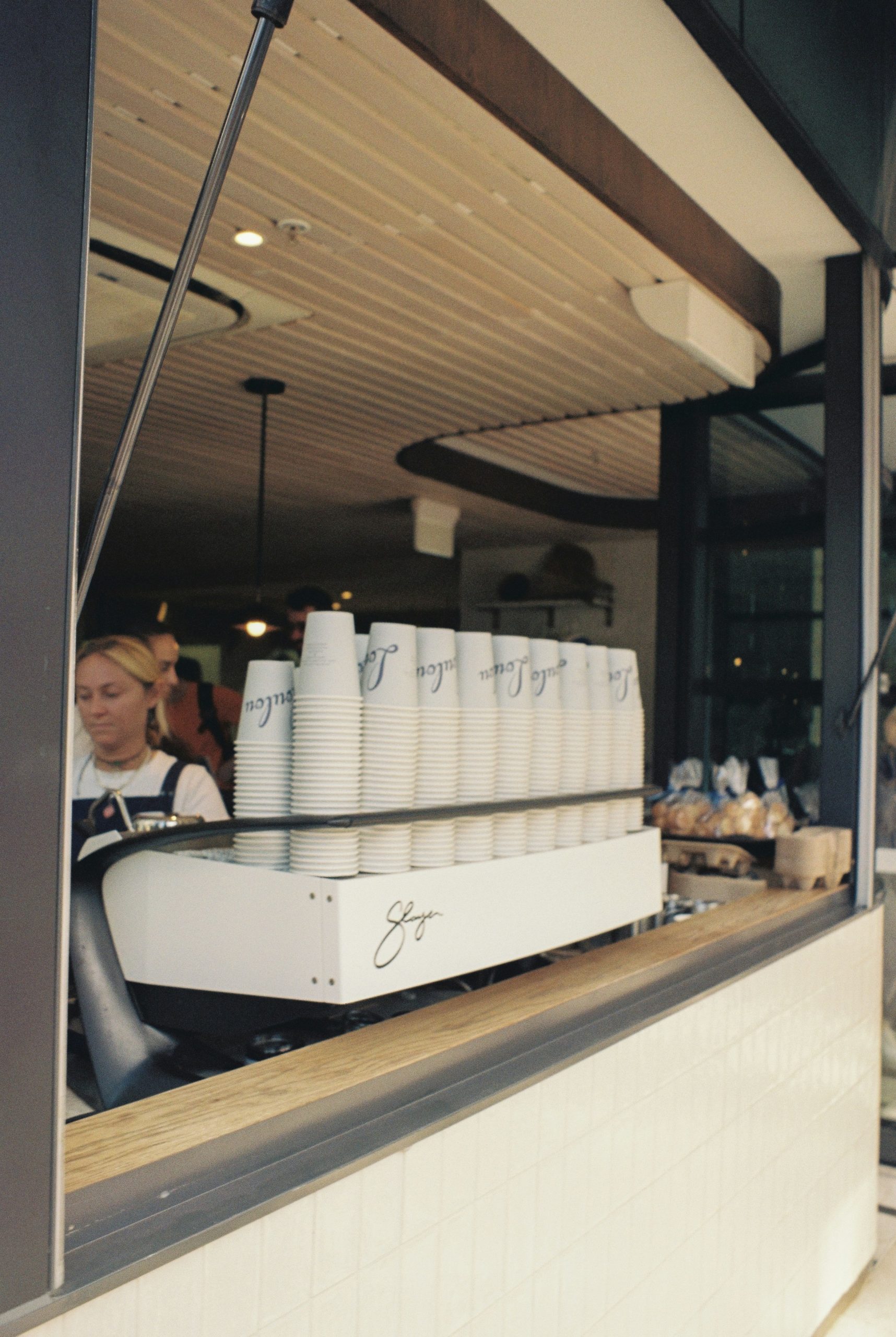
The Day I Did the Coffee Maths — And Lifestyle Creep Finally Made Sense
There was a time in my career where I had a cafe directly underneath my office. Downstairs, literally next to the lobby door. A few minutes and I could be back at my desk before anyone realised I’d gone. It was, without exaggeration, the single most convenient cafe in my working life.
Before I get into the numbers: this isn’t a post about the biggest financial moves. Buying a house, the car you drive, negotiating a salary, picking the right retirement fund — those certainly make a significant difference financially, and I’d never tell you otherwise. This is a post about something smaller — the kind of everyday lifestyle creep that doesn’t feel like a decision at all, because it’s never really weighed as one. That cafe is where I learned the difference.
Why I actually did the maths
Funnily enough, money wasn’t the reason I sat down and worked this out. Health was.
This was about a year before I resigned from the job that was slowly consuming me — the long days, the running on empty, all of it. I was drinking a lot of coffee at the time, not eating breakfast, and the two things together left me feeling wired and hollow by mid-morning. I was high strung and running on caffeine for at least half the day. It wasn’t a great pattern, and after a year or so, it certainly didn’t feel good. So, I went looking for reasons that might convince me to cut back. While the health argument is clearly the strongest, it’s harder to track something that doesn’t necessarily show.
You know what is easy to track, especially for someone who spent a fair chunk of their day in spreadsheets? Cost. And it turned out to be far more convincing than I expected.
I worked out that takeaway coffee was quietly taking up around four to five percent of my total salary, pre-tax. Crazy! I couldn’t believe it. Four or five percent, going to something so small that I’d never really thought about, felt genuinely absurd. That number did more to get me to actually change something than the health argument ever had on its own.
The numbers add up
I was buying around three coffees a day. At about $4-5 each, which is roughly where it sat then.
Three coffees a day. Twelve to fifteen dollars. Five days a week, most weeks of the year. Funnily enough, almost exactly what one lunch alone would cost me — more on that below. (There’s a quick calculator further down too if you want to run your own numbers.)
Do that maths properly — and I hadn’t, not once, until the health thing pushed me to actually sit down and do it — and you land somewhere around three thousand dollars a year. On coffee. Bought without a single moment of consideration, five dollars at a time, from the cafe downstairs that made not thinking about it so easy.
That’s before you even get to the four to five percent of salary framing, which is really what made it land. A dollar figure is easy to shrug off. A percentage of everything you earn is harder to.
“You can’t save your way to wealth” — it’s a bit more nuanced than that
There’s a common thought that says you can’t save your way to wealth — that cutting coffees won’t make you rich, and the real lever is to instead focus on earning more. There’s absolute truth in that. If you’re on minimum wage, the non-negotiables — rent, food, clothing, getting to work — already eat most of what comes in. There’s not much room left to save your way anywhere.
On the other hand, drawing attention to your savings rate is helpful too. As income grows, the non-negotiables stop growing at the same pace. That gap — the space between what you earn and what you actually need to spend — is where lifestyle creep lives, and it’s also where a genuine choice opens up. You can let that gap quietly fill with things you haven’t had before or levelled up versions of things you already own. Or you can choose to move your savings rate up instead.
It’s not really an argument with two sides. It’s a sliding scale, and both ends of it are describing something true about different points on it.
For what it’s worth, my own answer to that trade-off leans toward working an extra year or two, and working hard, rather than squeezing every dollar into savings the whole way through. My wife’s family is in Europe, and travelling to see them properly — not just once we’re both retired, but throughout the working years in between — matters enough to me that I’m happy to pay for it with a slightly longer runway. That’s a luxury, and I know it. But it’s the trade I’d make again.
The other signs of lifestyle creep I wasn’t watching for
The coffee maths wasn’t really about the coffee. It’s what it led me to look at next — other signs of lifestyle creep I hadn’t been watching for at all.
Work lunch was actually the bigger one. A regular takeaway lunch back then was around twelve dollars, most days of the working week. Fridays I’d usually splurge — the pub, a fancy burger joint — and that easily doubled at minimum. Across eight years and a handful of different offices, each one surrounded by its own rotating cast of sandwich bars, cafes, salad places, sushi joints and, on the right day, a pub with the kind of menu you’d expect. I picked whatever I felt like, with genuinely no thought about what I should be spending or any figure I was holding myself to. If I ever brought lunch from home, it was almost always part of some short-lived health kick that didn’t last.
Add that up properly and it comes out a bit higher than coffees. Twelve dollars a day, most days, more than doubled on Fridays — that’s not a rounding error next to a $3,000 coffee habit, that’s the slightly bigger number sitting quietly underneath it the whole time.
None of it was reckless. Nobody would have looked at my week and called it extravagant. That’s exactly the trap. Lifestyle creep doesn’t need extravagance. It just needs a long run of small purchases that nobody, including you, ever adds up.
My bank account was paying the price the entire time. I just wasn’t looking closely enough to see the invoice.
The other cost
There’s a second cost that took me even longer to properly understand, and it’s the more important one.
The money spent on coffee and lunches wasn’t just gone. It was gone instead of being somewhere else — instead of sitting in an index fund, quietly compounding, for however many decades I had left to let it. It wasn’t until I built that basic spreadsheet, watching compound growth play out over thirty years, that this actually landed for me. A few thousand dollars a year, redirected early enough, is a genuinely different number by the time you’re my age than the number sitting in the till of a cafe or a sandwich bar.
That’s the actual cost of not paying attention. Not the five dollars, or the twelve. The five dollars and the twelve dollars, repeated for years, that never got the chance to grow into something.
Where things landed
I didn’t quit coffee, and I never really wanted to. These days, on weekends at home, it’s a stove top — one day I’ll probably get a proper espresso machine, but that’s a way down the track. During the week, my current workplace has a genuinely good barista-level machine, and I use it most days I’m in the office. Every now and then I still catch myself doing a rough version of the old maths — working out what that free coffee is quietly saving me — and it’s a nice thing to notice rather than something I have to think hard about.
My wife’s the bigger coffee person between us — she’s into pour-overs and takes it a lot more seriously than I do. I like that it’s something we both genuinely enjoy, just from different angles. It was never really about giving coffee up. It was about using whatever’s actually in front of you, rather than defaulting to the most convenient version without a second thought.
Lunch shifted more slowly, and less completely, but the same thing happened there — noticing became the habit, even when the old pattern crept back in for a while.
Where to look in your own life
You don’t need to track every transaction forever. But it’s worth picking one small, frequent, barely-considered purchase — coffee, lunch, whatever your version of the cafe downstairs is — and actually do the maths on it. Work out what it comes to over a year. Are you happy with the amount that’s going there?
What’s your version of the coffee habit actually costing you?
Pick anything small and frequent — coffee, lunch, whatever it is for you. Punch in the real numbers and see the yearly total.
Rough illustration only, using a flat 7% assumed annual return — not a projection, promise, or financial advice. Markets don’t move in a straight line, and this isn’t a substitute for your own research.
You might look at it and decide it's genuinely worth it. Plenty of my spending still is. But you'll be deciding, rather than defaulting. And it never has to be black or white, with all or nothing.
That's really all the coffee maths ever was for me. Not a diet. Not a ban. Just the moment I started looking at the small numbers as closely as I'd started looking at the big ones.
— Dave
Want to follow along?
One email every week or two on living better. No noise, no fluff.